Physical Address
304 North Cardinal St.
Dorchester Center, MA 02124
Physical Address
304 North Cardinal St.
Dorchester Center, MA 02124
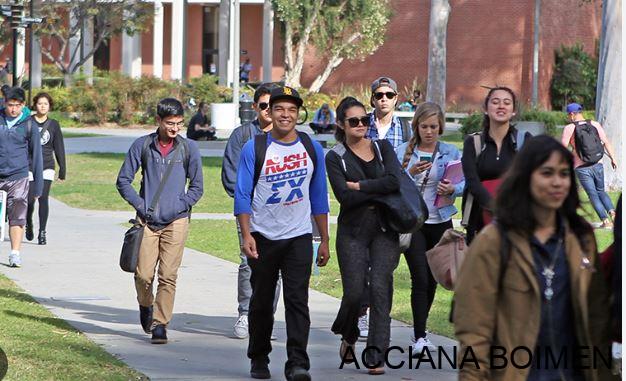
For many aspiring physicians, the cost of medical education is the single greatest barrier to entry. When students look beyond their home country—particularly toward the United States—they often ask whether medical school scholarships abroad are realistic or largely symbolic. The answer is nuanced. The United States remains one of the most competitive and expensive destinations for medical education, yet limited scholarship pathways do exist. Understanding how they work, who qualifies, and what obligations they carry is essential before applying.
Unlike many countries where public universities are heavily subsidized, most U.S. medical schools—whether public or private—rely significantly on tuition revenue. International students are generally not eligible for U.S. federal student aid programs administered by the U.S. Department of Education. This restriction shapes the scholarship landscape.
Answer 8 quick questions and get a personalized eligibility report with your score, strengths, and next steps — in under 2 minutes.
Take our Advanced Quiz to uncover hidden strengths and get a full action plan to maximize your fellowship chances.
Based on both quizzes, you have a solid profile for fellowship and scholarship applications. Here's your action plan:
As a result, institutional scholarships for international students are limited and highly competitive. Many schools prioritize domestic applicants for need-based aid because federal funding and state subsidies are designed primarily for U.S. citizens and permanent residents.
That said, certain categories of financial support are available:
The feasibility of each pathway depends on immigration status, academic record, and long-term career plans.
Advertisements1
Answer 5 quick questions and we'll match you with the best scholarships, visas, and work opportunities for your exact profile.
Ranked by compatibility with your profile
Admission to U.S. medical schools requires a bachelor’s degree (or equivalent), prerequisite coursework in sciences, and standardized testing such as the MCAT. International applicants must also demonstrate English proficiency and credential equivalency.
According to the Association of American Medical Colleges (AAMC), only a small percentage of U.S. medical schools routinely accept international applicants. Even fewer offer need-based aid to non-citizens.
For visa purposes, most admitted international students enter on an F-1 student visa under regulations overseen by the U.S. Citizenship and Immigration Services (USCIS). The F-1 visa requires proof of sufficient financial resources for the duration of study—often covering multiple years of tuition and living costs.
This requirement means that even scholarship recipients must typically demonstrate additional financial capacity.
| Scholarship Type | Who Funds It | Eligibility Focus | Immigration Impact | Common Limitations |
|---|---|---|---|---|
| Institutional Merit Scholarship | Medical School | Academic excellence, leadership, research | No direct immigration benefit | Highly competitive; limited awards |
| Need-Based Institutional Aid | Medical School Endowment | Demonstrated financial need | Requires proof of remaining funds | Often restricted to U.S. citizens/permanent residents |
| Private Foundation Grant | Nonprofit Organizations | Field of interest, demographics, service goals | No visa preference | Partial funding only |
| Home Government Sponsorship | Student’s Home Country | National development priorities | May require return home after training | Service obligation required |
| Service-Linked Programs | Federal or State Workforce Programs | Commitment to underserved areas | Citizenship often required | Limited access for international students |
Ana, a biology graduate from Brazil, applied to U.S. medical schools with a strong academic record and research experience. She secured admission to a private institution that offers limited merit-based scholarships to international students.
Her award covered a portion of tuition based on academic distinction. However, to obtain her F-1 visa, she still had to demonstrate sufficient financial resources for remaining expenses across four years. She combined personal savings, family support, and documentation of her scholarship award to meet visa requirements.
After graduation, Ana pursued residency training under a J-1 visa sponsored by a recognized exchange program. She later faced the two-year home residency requirement attached to her J-1 status, illustrating how scholarship and visa pathways intersect with long-term immigration planning.
This example reflects a common pattern: scholarships reduce cost but rarely eliminate financial or immigration complexity.
International medical students must consider what happens after graduation. Completing a U.S. medical degree does not automatically confer work authorization.
Most international graduates enter residency programs under either:
The J-1 pathway often includes a two-year home country physical presence requirement unless a waiver is granted. Waivers are typically tied to service in medically underserved areas, reflecting U.S. workforce policy goals.
This is where scholarships tied to service commitments may align with immigration objectives—but such programs usually prioritize U.S. citizens or permanent residents.
The United States faces physician shortages in rural and underserved urban areas. According to workforce analyses published by national medical associations, shortages are projected to continue over the coming decade. However, scholarship funding mechanisms are structured around retaining physicians domestically.
Programs designed to address shortages often require long-term U.S. service commitments and citizenship eligibility. From a policy perspective, public funds are directed toward candidates most likely to remain in the domestic workforce.
For international students, this creates a structural gap: access to education is possible, but public funding tied to workforce retention is often restricted.
Applicants pursuing scholarships abroad for U.S. medical schools typically need:
Financial documentation is particularly critical. U.S. consular officers assess whether students can sustain themselves without unauthorized employment. Scholarships reduce the funding gap but must be formally documented.
These commitments reflect regulatory requirements rather than discretionary hurdles.
Pursuing medical school in the United States offers exposure to advanced research environments and structured clinical training. However, for international students, scholarships rarely offset the broader regulatory and financial commitments.
Students sponsored by their home governments may benefit from predictable funding but often accept mandatory return obligations. Those relying on institutional merit aid must balance competitiveness against financial proof requirements.
Ultimately, the decision is less about finding a fully funded opportunity and more about evaluating long-term professional goals, immigration strategy, and financial sustainability.
Medical school scholarships abroad, particularly in the United States, exist within a tightly regulated ecosystem shaped by tuition structures, immigration law, and workforce policy. For international students, opportunities are real but limited and highly competitive. Most funding is partial, and visa requirements require independent financial stability.
A careful review of institutional policies, immigration regulations, and long-term career planning is essential before committing to this pathway. The U.S. medical system can offer substantial academic and clinical exposure, but scholarships rarely eliminate the broader structural commitments involved.
Editorial Note: This article is based on publicly available information from U.S. government and medical education sources. It is intended for informational purposes only and does not constitute legal or financial advice. Immigration and scholarship policies change regularly; readers should verify current rules through official government and institutional websites. The author has experience researching international education systems and immigration policy frameworks.


